
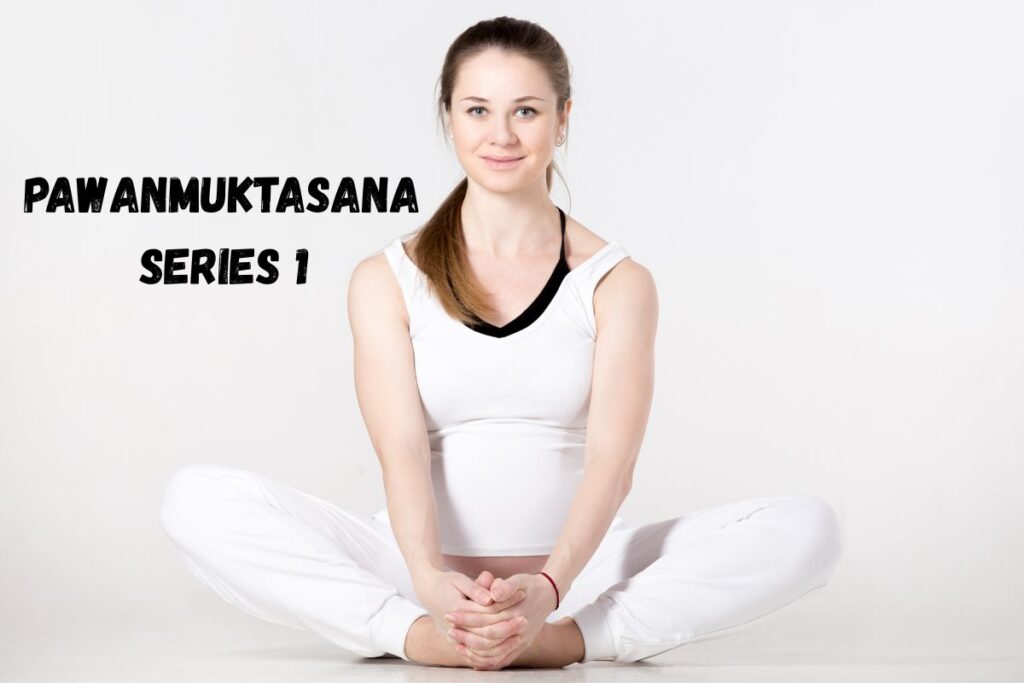
Pawanmuktasana Part 1: The Gateway to Better Digestion and Joint Health
Stiffness in the joints and bloating in the belly are common complaints that many simply put up with as part of daily existence. We tend to think yoga means twisting up and down or doing it standing on our heads to be effective. However, some of the greatest healing occurs with the most basic of movements. Enter Pawanmuktasana Series 1, a basic group of practices, commonly known as the “anti-rheumatic” group.
This series isn’t to sweat through a power flow. Instead, it concentrates more on subtle, systematic movements that help release energy blockages, improve joint mobility, and, most famously, help to expel trapped gas from the digestive system. Whether you are recovering from an illness or a complete beginner, or just feeling stiff from sitting at a desk all day, this is a gentle path back to comfort.
Here is why this sequence is important, how it benefits your body, and just how to do it.
What is Pawanmuktasana Series 1?
The word “Pawanmuktasana” is derived from three Sanskrit words: Pawan, meaning wind/air; Mukta, meaning release; and Asana, meaning pose. Therefore, it literally means the “wind-relieving pose.”
While many people are familiar with the particular single pose in which you hug your knees to your chest, the Pawanmuktasana Part 1 is actually a whole exercise created by the Bihar School of Yoga. It attacks the large joints in the body – from the toes up to the neck.
The following series is a preparatory practice. It opens up the joints and relaxes the muscles in the body, preparing it for more advanced asanas that can be tried. It’s often the very first thing learned by new students of yoga because it helps the student to form the link between movement and breath without the strain of holding difficult postures.
Why Your Body Needs to Have this Series
This is such a powerful sequence because it treats two major issues: poor circulation in the joints and digestive stagnation.
Joint Health and Arthritis Prevention
Synovial fluid is the natural lubricant in your joints. When we are sedentary, this fluid can stagnate and absorb, causing stiffness. The series of systematic rotations and flexions of joints involved in this series stimulates the production and circulation of synovial fluid. This makes it incredibly beneficial to those who suffer from arthritis, rheumatism, or stiffness in general.
Better Digestion and Relief from Gas
The “wind-releasing” part is literal. By moving the body in certain ways, especially the legs and hips, you are massaging the abdominal organs. This helps push trapped gas through the digestive tract to help it move along, reducing bloating and constipation.
Removing Energy Blockages
In the Yogi philosophy, there are Nadi (chakras) through which Prana (life force) flows. Tension blocks this flow. By working through each joint, you release these blocks, and energy is able to flow once again. This often results in a sense of lightness and increased vitality following practice.
Who Should Practice This?
The great thing about Pawanmuktasana Part 1 is its all-inclusiveness. It is suitable for virtually everyone:
- Beginners: It helps to develop body awareness.
- Seniors: This is easy on the joints and can also often be adapted for a chair.
- Office Workers: It compensates for the stiffness caused by sitting in all day.
- Those in Rehabilitation: It is great for rebuilding one’s mobility after an injury or illness.
Step-by-Step Introduction to the Sequence
The series usually proceeds from the extremities (toes and fingers) inwards towards the core. Do these movements slowly and coordinate them with your breath. Sit in a comfortable position, preferably Dandasana (Base Pose) with legs spread out in front, hands on the floor next to the hips for support. Keep your spine straight.
Check Out Our 300 hour yoga teacher training
Part 1: The Toes and Feet
Padanguli Naman (Toe Bending)
- Sit with legs outstretched.
- Focus only on your toes.
- Inhale while you are moving your toes backwards towards your body.
- Exhale, curling your toes forward and down.]
- Repeat 10 times. This helps strengthen toe joints as well as relax the feet.
Goolf Naman (Ankle Bending)
- Remain in the base position.
- Inhale and draw your feet backwards from the ankle joint (flexing).
- Exhale and stretch your feet forward (pointing).]
- Keep your knees straight. Repeat 10 times.
Goolf Chakra (Ankle Rotation)
- Separate your legs slightly.
- Rotate your feet from the ankles in a clockwise circle.
- Inhale on the upward movement, exhale on the downward movement.
- Do 10 rotations clockwise, and then 10 anti-clockwise. This helps in improving the lymph flow in the legs.
Part 2: The Knees
Janu Naman (Knee Bending)
- Bend the right knee and hold the hands under the right thigh.
- Inhale and extend the leg while keeping the foot off the floor.
- Exhale, bend the knee, and bring the heel near the buttock.
- Repeat 10 times for each leg. This contracts the muscles of the thigh and compresses the knee joint.
Janu Chakra (Knee Crank)
- Holding the right thigh to the chest with the hands held under the knee.
- Rotation of the lower leg, large circular.
- The leg (thigh) should remain relatively still; movement is provided from the knee.
- Do 10 times in both directions for both legs.
Part 3: The Hips & Pelvis (Crucial to Digestion)
Ardha Titali Asana (Half Butterfly)
- Point your right foot at your left thigh.
- Hold the right knee with the right hand and hold the toes with the left hand.
- Gently bend the knee up into the chest (inhale) and push it down to the floor (exhale).
- Do this rhythmically, but of course, gently. Repeat 20 times on each side.
Shroni Chakra (Hip Rotation)
- Keep the right foot on the left thigh.
- Use your right hand to make the right knee circle.
- Make the circle as large as you can, without straining.
- Breathe in on the rise, and breathe out on the fall.
- Perform 10 rotations in each direction, for both legs. This is a very deep working of the hip joint.
Poorna Titali Asana (Complete Butterfly)
- Bring the soles of both feet together. Let heels come as near to the body as possible.
- Hold your feet with both hands.
- Gently bounce the knees up and down while standing.
- Do this for 30-60 seconds. This helps to release tension in the inner thighs and activate the abdominal organs.
Part 4: The Hands and Wrists
Mushtika Bandhana (Clenching of Hands)
- Either sit with legs straight or cross-legged.
- Extend arms forward at shoulder level.
- Inhale and stretch fingers at wide-open palms.
- Exhale and make a small fist, squeezing fingers in with the thumb tucked in.
- Repeat 10 times.
Manibandha Naman (Bending of the wrist)
- Keep arms extended.
- Inhale and bend your hands backward from the wrist (fingers pointing to the ceiling).
- Exhale and bend your hands forward (fingers to the floor).
- Repeat 10 times.
Manibandha Chakra (Rotation of Wrist Joint)
- Make fists with the thumbs in.
- Turn the fists over from the wrists.
- Breathe in while going up and out on the way down.
- Rotating ten times in each direction.
Part 5: The Shoulders and Neck
Skandha Chakra (Rotating Shoulder Socket)
- Place the fixtures of your right hand on your right shoulder and align your left hand on your left shoulder.
- Bring your elbows back together to your chest in front of you.
- With elbows bent backwards, rotate up, back, and down in a large circle.
- Take in (inhale) – elbows go up and back (opening the chest).
- Exhale when they are coming forward and touching.
- Repeat 10 times in either direction. This takes the stress of driving or office work.
Greeva Sanchalana (Neck movements)
- Sit properly, with the back straight. Close your eyes.
- Forward/Backward: Exhale, bring chin in to chest. Inhale. Gently drop your head backward. (Repeat 5 times).
- Side to Side: Exhale, right ear to right shoulder. Inhale to the center. Out (Exhale), left ear to left shoulder (Repeat 5 times).
- Rotations: Rotate the head slowly and smoothly in a circular motion. Breathing in on the way up and out on the way down. Be very gentle. (3 times each way).
Tips for Success
To maximize the benefits of Pawanmuktasana Series 1, try to keep these tips in mind:
- Awareness is Key: Don’t Just Go Through The Motions. Make your mind aware of the joint you are moving. Feel the stretch and feel the relaxation.
- Coordinate the Breath: The breath should lead the movement. This synchronization is relaxing in the nervous system.
- Do Not Strain: These are soft exercises. If you feel sharp pain, then stop immediately.
- Consistency: Doing this series daily, for 20 minutes, is better than doing a hard workout once a week.
Conclusion
Pawanmuktasana Series 1 proves that yoga need not be complicated to be effective. By systematically working
through the joints, you can let out physical stiffness and stagnant energy. Whether you are searching to enhance your digestion, ease the symptoms of arthritis, or just take your body out of a sluggish mode in the morning, this sequence is a solid foundation for health.
Try to use these movements in your daily routine tomorrow morning. You can be surprised at how light and free you feel.
Explore Yoga school in rishikesh for authentic learning and become a better practitioner. Ready to teach? Join our 200 hour yoga teacher training in rishikesh and have a life-changing experience.